
What does it truly mean to live a vain life? The vain meaning in the Bible goes far deeper than vanity mirrors or self-obsession. Scripture uses this powerful word to expose the emptiness of life lived apart from God and to lovingly call every heart back to truth, humility, and eternal purpose.
Biblical Vain Meaning
What Vain Means in Scripture
The biblical vain meaning draws from two primary original languages. In the Old Testament, the Hebrew word hebel means “vapor” or “breath” , something real but fleeting, impossible to hold. In the New Testament, the Greek word kenos means “empty” or “purposeless.”
Together, these words paint a clear picture: what does vain mean in the Bible? It means anything that lacks lasting substance, divine purpose, or eternal value. It is not merely about arrogance it is about misplaced trust and hollow pursuits.
| Original Word | Language | Literal Meaning | Biblical Application |
| Hebel | Hebrew | Vapor / Breath | Fleeting, temporary things (Ecclesiastes) |
| Kenos | Greek | Empty / Hollow | Purposeless acts, worthless worship |
| Shav | Hebrew | Worthless / False | Taking God’s name in vain (Exodus 20:7) |
| Mataios | Greek | Futile / Vain | Empty thinking, idol worship (Romans 1:21) |
Vain and the Heart
Scripture consistently links vanity in the Bible with the condition of the inner heart. When people turn from God toward worldly success, selfish ambition, or earthly treasures, their thoughts become spiritually empty not because God condemns them, but because He designed the heart for something greater.
Romans 1:21 describes this directly: people whose foolish hearts were darkened because they did not glorify God. This is the vain meaning in the Bible at its deepest level: a heart disconnected from its source.
Is Vain Always Negative?
In biblical context, “vain” functions as a gracious warning rather than a harsh verdict. God exposes vanity not to shame but to restore. Recognizing spiritual emptiness is actually the first step toward repentance and humility, the very qualities God honors most.
Spiritual Significance and Symbolism of Vain
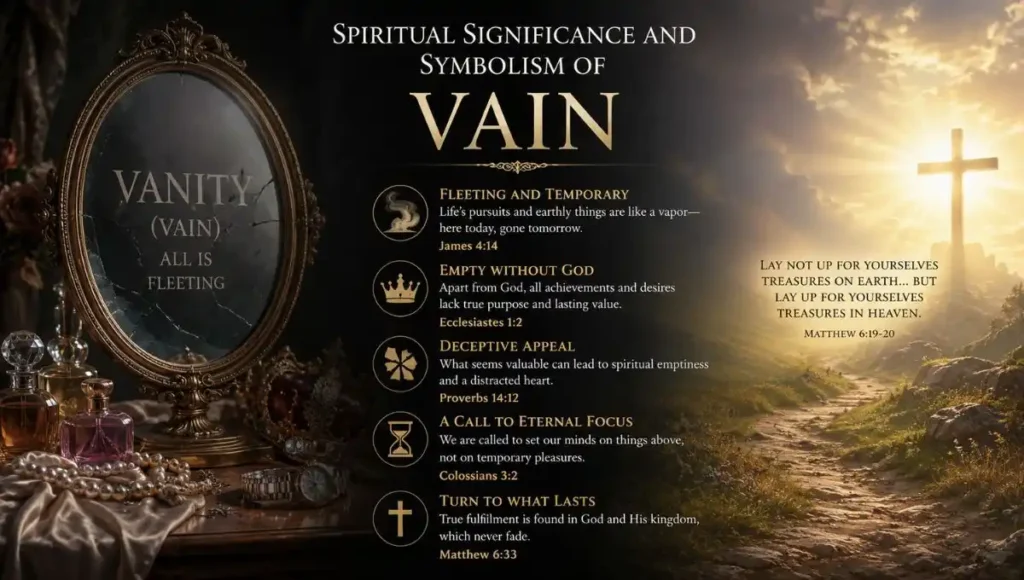
The spiritual vain meaning in Scripture is layered with rich symbolism. A vapor disappears the moment you reach for it. Riches accumulated without God scattering. Worship offered without a sincere heart echoes in an empty room.
Spiritually, vain represents:
- False security trusting wealth, status, or human power over God’s guidance
- Spiritual blindness pursuing worldly success while neglecting eternal life
- Empty worship religious ritual performed without a humble heart (Matthew 15:8–9)
- Misplaced identity defining oneself by temporary pleasures instead of God’s truth
The biblical symbolism of vain always points back to the same truth: anything built outside of God’s wisdom and purpose is like a house of vapor beautiful in appearance, hollow at its foundation.
Common Bible Verses About Vanity and Their Meaning
These key passages define the vain definition in Scripture across different books and contexts:
| Bible Verse | Key Theme | Core Message |
| Ecclesiastes 1:2 | Vanity of vanities | All worldly pursuits are fleeting without God |
| Psalm 127:1–2 | Labor in vain | Work without God’s blessing yields emptiness |
| Romans 1:21 | Vain imaginations | Rejecting God darkens the heart and mind |
| Matthew 15:8–9 | Vain worship | Lip service without true devotion is worthless |
| 1 Corinthians 15:14 | Vain faith | Faith without the resurrection is empty |
| Proverbs 21:6 | Vain wealth | Dishonest gain is a fleeting, dangerous pursuit |
Ecclesiastes 1:2 “Vanity of Vanities”
King Solomon, widely believed to be the author of Ecclesiastes, had wealth, wisdom, and power beyond measure. Yet his conclusion was striking: “Vanity of vanities all is vanity.”
The vanity of vanities meaning uses a Hebrew superlative form to the most extreme degree possible, like “Holy of Holies.” Solomon was declaring that life lived only under the sun, without eternal purpose, is the deepest form of emptiness imaginable.
Psalm 127:1 Labor in Vain
“Unless the Lord builds the house, the builders labor in vain.” This verse captures a foundational biblical principle: human effort without God’s blessing, however impressive, ultimately produces nothing of lasting value. It is not an attack on hard work, it is an invitation to partner with God in everything.
Romans 1:21 Vain Imaginations
Paul describes those who knew God but chose not to honor Him: their thinking became futile and their hearts darkened. The vain meaning in the Bible here touches on spiritual blindness, the dangerous condition of a mind turned away from God’s truth.
Biblical Interpretations in Dreams or Real Life
When the theme of vanity or vain living surfaces repeatedly in someone’s thoughts, circumstances, or even dreams, Scripture invites reflection rather than fear. Biblically, these experiences often signal a moment of spiritual awakening God’s gentle way of drawing attention to misplaced priorities.
Signs of vain living according to biblical teachings include:
- Feeling deeply unfulfilled despite outward success
- Persistent restlessness that possessions or achievements cannot settle
- A growing sense that daily labor lacks meaning or direction
- Emotional emptiness even in moments of worldly achievement
These are not signs of failure. They echo Solomon’s own journey as a man who had everything, recognized the vanity of it all, and ultimately concluded: “Fear God and keep His commandments, for this is the whole duty of man” (Ecclesiastes 12:13).
Recognizing vain patterns is a divine invitation to seek God with renewed purpose.
Must Read: Jennifer Meaning in Bible
How to Overcome Vanity Through Faith and Humility
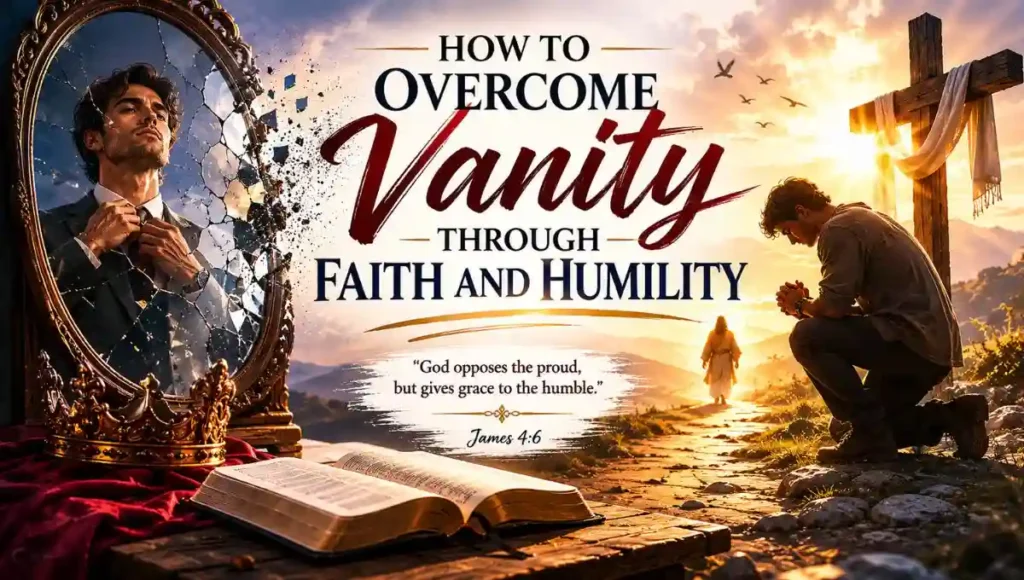
The Christian meaning of vain always carries hope alongside the warning. God never exposes emptiness simply to condemn He reveals it to redirect. Here is how Scripture guides believers toward overcoming pride through faith:
1. Renew the Mind Through God’s Word Romans 12:2 calls believers to be transformed by the renewing of the mind. Regular engagement with biblical teachings replaces vain thoughts with God’s truth, gradually shifting focus from earthly treasures to eternal purpose.
2. Practice Biblical Humility Proverbs 11:2 reminds us that pride brings disgrace, but humility brings wisdom. Humility is not self-deprecation, it is accurate dependence on God, recognizing that every good gift flows from Him. This is the antidote to human pride as described throughout Scripture.
3. Anchor Work and Goals in God’s Purpose 1 Corinthians 15:58 offers a beautiful promise: labor done in the Lord is never vain. When daily work is offered to God’s glory, even ordinary tasks carry eternal weight. This transforms worldly pursuits into sacred service.
4. Guard the Heart in Prayer Psalm 119:37 asks God to “turn my eyes away from worthless things.” Regular prayer keeps the heart anchored in God’s guidance rather than drifting toward false security and selfish ambition.
Practical Lessons & Faith Insights
The vain meaning in the Bible is not ancient philosophy, it is a living warning for modern Christian living. Every generation faces its own version of vanity: social media image, financial ambition, status-seeking, or hollow religion.
Key Takeaways for Christian Living:
- Vanity is not irreversible. Scripture shows that recognition of emptiness is the doorway to repentance and restored relationship with God.
- Labor in vain is avoidable. Psalm 127 teaches that inviting God into your plans, your family, career, and daily routine transforms effort into fruitful work.
- Worship must be genuine. Matthew 15:8–9 warns against ritual without relationship. True obedience to God flows from a heart that genuinely seeks His presence.
- Eternal perspective cures vanity. Colossians 3:2 instructs believers to set their minds on things above. Keeping eternal life in view makes temporary, vain pursuits lose their grip.
- Humility is the path forward. James 4:6 declares that God gives grace to the humble. Faith and humility together form the strongest defense against spiritual emptiness.
Is Vanity a Sin?
Yes when it reflects a deliberate turning away from God toward self-worship or idol worship. However, the biblical definition of vanity also includes unintentional emptiness, the result of living without divine direction.
The good news is that Scripture consistently pairs the warning against vanity with an open invitation: seek God, and you will find meaning that is full, lasting, and alive.
Conclusion
The vain meaning in the Bible is one of Scripture’s most gracious and consistent messages. From King Solomon in Ecclesiastes to the Apostle Paul in Romans, God’s Word repeatedly shows that life built on pride, worldly success, or empty worship cannot satisfy the human soul.
Vanity, whether understood as fleeting vapor, hollow effort, or darkened imagination, always points to the same solution: trust in God, walk in humility, and anchor every pursuit in His eternal purpose. When believers recognize vain patterns, it is not a moment of shame. It is a divine invitation to return.
As 1 Corinthians 15:58 promises: “Your labor in the Lord is not in vain.“ That single truth transforms everything, turning empty striving into eternal significance, and bringing every wandering heart back to the God who gives life its fullest meaning.

Khurram Ali is a dedicated content writer at BiblesGalaxy.com, specializing in Bible verses, biblical meanings, and spiritual insights. He creates well-researched, engaging, and easy-to-understand content that helps readers explore the deeper messages and teachings of scripture. With a strong focus on clarity, authenticity, and SEO-friendly writing, Khurram aims to provide valuable and inspiring content for those seeking faith, guidance, and a stronger connection with the Bible.







A person essentially help to make critically articles I might state.
This is the first time I frequented your web page and so far?
I surprised with the research you made to create
this actual post incredible. Magnificent job!